
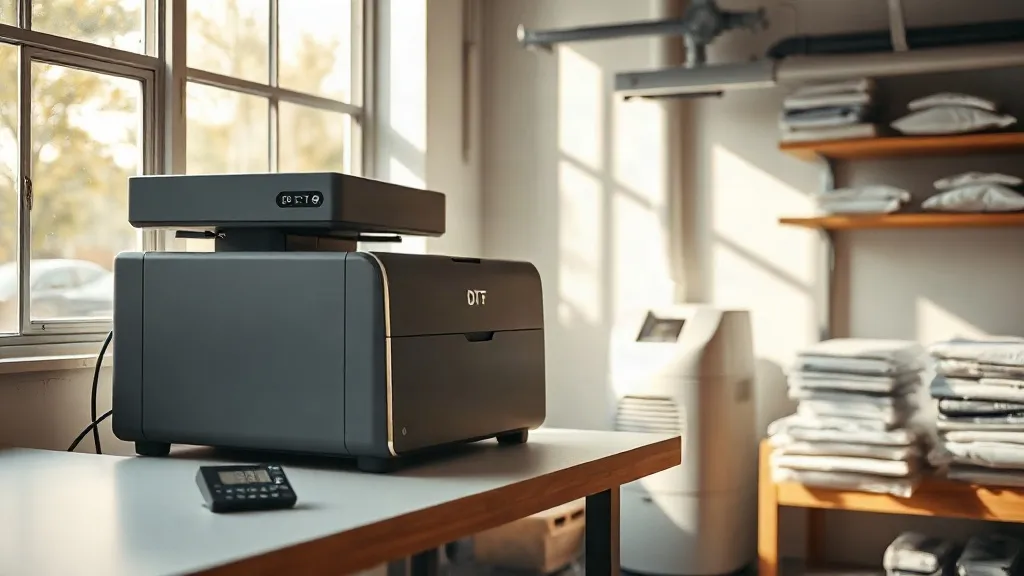
You've dialed in your press, your powder shake is consistent, and your film is fresh out of the bag. Yet some days the prints come out crisp and vibrant, and other days the same file on the same shirt looks dull, patchy, or starts lifting after two washes. Before you blame the ink or the supplier, take a breath. Literally. The air in your shop might be the variable you've never measured, and it's costing you money with every rejected order.
I've spent years helping print shops trace defects back to their source, and the conversation almost always starts with equipment and ends with the environment. In this guide, we'll break down how humidity, dust, and airflow interact with dtf transfers at every stage, from film handling to final cure, and give you a practical playbook for turning your shop's air into an asset instead of a liability.
Why Air Quality Matters More Than You Think
DTF printing is a chemistry-heavy process disguised as a simple press-and-peel operation. The ink is a suspension of pigment and resin in a liquid carrier. The powder is a thermoplastic adhesive that needs precise heat to melt and flow. Film is a coated PET sheet that must stay flat and clean. Each of these materials is sensitive to the surrounding air, and when conditions drift, so does your output.
Most shop owners track temperature and dwell time, but humidity and particulates rarely make it onto the checklist. That's a mistake. Relative humidity affects how quickly the ink carrier evaporates, how well the powder adheres before curing, and even how the film behaves as it moves through the printer. Dust and lint, meanwhile, can settle on wet ink or film and create pinholes, weak spots, and adhesion failures that only show up after washing.
The Three Air Variables That Matter
You don't need a full laboratory setup. Focus on three measurable factors:
- Relative humidity (RH): The amount of moisture in the air relative to its capacity at a given temperature. Most DTF workflows perform best in a stable 40–60% RH range, though your specific ink and film may have a narrower sweet spot.
- Airborne particulates: Dust, lint, powder overspray, and fibers floating in the air. These settle on wet ink, film, and freshly powdered transfers.
- Airflow and drafts: Strong drafts can dry ink unevenly, blow powder off the film before curing, or create hot and cold zones around the press.
When these three are out of balance, you get inconsistent dtf results that look like equipment problems but aren't. A print that fails adhesion in one corner of the shop but works fine in another is a classic sign of local air differences.
How Humidity Sabotages DTF Prints
Humidity is the most common culprit and the easiest to overlook because it doesn't announce itself. You won't see moisture on your film, but it's there in the air and in your materials. Here's what happens at both extremes.
Too Much Humidity
When RH climbs above 65%, several problems stack up. Film can absorb moisture and curl at the edges, which leads to feeding issues and misregistration. Powder applied to a damp ink layer can clump or fail to adhere evenly, creating patchy areas that cure weak. Even after curing, trapped moisture can cause bubbling or a cloudy finish when the transfer is pressed onto the garment.
I've seen shops in coastal or basement spaces fight adhesion issues for weeks, only to solve them with a dehumidifier and a $30 hygrometer. The fix is rarely glamorous, but it works.
Too Little Humidity
Dry air, common in winter or in air-conditioned shops, brings its own set of headaches. Static electricity builds up on film and garments, attracting dust and making powder application messy. Ink can dry too fast on the film before powder is applied, leading to poor powder pickup and weak adhesion. In extreme cases, the film itself becomes brittle and prone to cracking during handling.
Aim for stability rather than a single magic number. A shop that holds 50% RH year-round will outperform one that swings between 30% and 70%, even if the average is similar.
The Dust and Lint Problem You Can't See
Walk into any print shop and look at the air in a sunbeam. Those floating particles are landing on your work. In DTF, the window between printing and powdering is short but critical. Wet ink is a magnet for dust, and once a particle is embedded, it becomes a permanent defect.
Lint from garments is another underrated source. If you're pressing shirts in the same room where you print and powder, you're introducing fibers into the air that can settle on film and transfers. The fix is simple but requires discipline: separate the clean zone from the dirty zone.
Building a Clean Zone Without a Cleanroom
You don't need a sterile facility. You need a defined space where film is printed, powdered, and cured, kept away from garment handling, trimming, and general foot traffic. A few practical steps:
- Enclose the printer and powder station with a simple curtain or partition.
- Use a HEPA air purifier rated for the room's square footage and run it continuously during production.
- Keep floors swept and avoid compressed air for cleaning near the print zone.
- Store film in sealed bags or a closed cabinet, not on open shelves.
- Wear a clean apron or shop coat that doesn't shed fibers.
These changes cost little, but they dramatically reduce the random defects that eat into your margin and your reputation.
Airflow, Drafts, and Press Placement
Airflow is a double-edged sword. You want ventilation for fumes and heat, but you don't want drafts crossing the print or powder station. A nearby door, an HVAC vent, or a fan aimed at the press can all create problems.
Pay attention to where your press sits. If it's under an air conditioning vent, the platen may struggle to hold temperature, leading to inconsistent cures. If it's near a loading dock door that opens all day, humidity and dust will follow every delivery. In one shop I visited, moving the press six feet away from a ceiling vent eliminated a recurring corner-lift issue that had plagued them for months.
Ventilation That Works With You
You need to exhaust fumes and heat, but do it deliberately. Use a hood or an extraction fan positioned to pull air away from the operator and the print zone, not across it. If you're using a portable air conditioner, route the exhaust out of the room and keep the unit's intake away from the powder station. The goal is controlled exchange, not a wind tunnel.
A Practical Air Quality Routine for Your Shop
Turning air quality into a routine is easier than it sounds. Here's a sequence that fits into a normal production day without adding much time.
- Morning check: Read your hygrometer and note the RH. If it's outside your target range, adjust the dehumidifier or humidifier before starting production.
- Pre-flight the clean zone: Wipe surfaces, confirm the air purifier is running, and check that film storage is sealed.
- Midday spot check: If you notice static or powder clumping, re-check humidity and airflow. Small adjustments early prevent wasted film later.
- End-of-day reset: Close film bags, clean the powder station, and log any defects with the day's air readings. Patterns will emerge within a week or two.
This log is your diagnostic tool. When a customer reports a wash failure, you can check whether that batch was produced on a high-humidity day or during a dust-generating project. Over time, you'll spot correlations that no generic troubleshooting guide can give you.
When to Look for Local Help
If you've controlled your shop's air but still see inconsistent results, it may be time to compare notes with other printers or source materials from a supplier who understands environmental sensitivity. Searching for dtf transfers near me can connect you with local shops or vendors who have already solved the same climate challenges in your area. Their experience with your regional humidity and temperature patterns is often more valuable than generic advice.
Don't underestimate the value of a conversation with a nearby printer. Many of the best fixes I've seen came from a simple question asked over coffee: how do you handle July humidity? The answer is usually practical, cheap, and immediately useful.
Frequently Asked Questions
What humidity level is ideal for DTF printing?
Most shops do well in the 40–60% relative humidity range, but the key is stability. Your specific ink, powder, and film may perform best at a narrower band. Start with a hygrometer, log your results, and adjust toward the range where your defects are lowest.
Can a dehumidifier really fix adhesion problems?
It can fix adhesion problems caused by excess moisture, which is one of the most common causes. If film is curling, powder is clumping, or prints bubble during pressing, humidity is a likely suspect. A dehumidifier plus a hygrometer is a low-cost experiment that often pays for itself in saved materials.
How do I stop dust from ruining my prints?
Separate your clean zone from garment handling and trimming, run a HEPA air purifier, store film sealed, and avoid compressed air near the print station. Small changes in workflow and room layout make a bigger difference than expensive equipment.
Why do my prints fail only in certain corners of the shop?
Local air differences are the usual reason. A draft from a door, a vent blowing on the press, or a dusty corner can create inconsistent conditions. Move the press or the powder station, or add a partition to stabilize the microclimate around your equipment.
Does static electricity affect DTF transfers?
Yes, especially in dry air. Static attracts dust to film and garments and can make powder application uneven. Raising humidity slightly and using anti-static measures around the powder station usually solves it.